Trenchless methods are the same across Canada, but the rules around them are local. Each city decides who owns which part of a sewer or water service, whether it runs its own lining programs, and what permits apply; each province has its own one-call locate service and workplace excavation rules. The notes below were verified on official sites in September 2026 and should be confirmed before you hire.
- Ownership of the service line varies: EPCOR owns Edmonton laterals from the property line to the main, while Winnipeg owners own theirs all the way to the main.
- Calgary runs a pilot program lining sanitary service pipes and is building most of its new TransCanada Sanitary Trunk by microtunnelling.
- Toronto relines watermains under its TS 7.60 specification and publishes guidance on styrene odour from sewer relining.
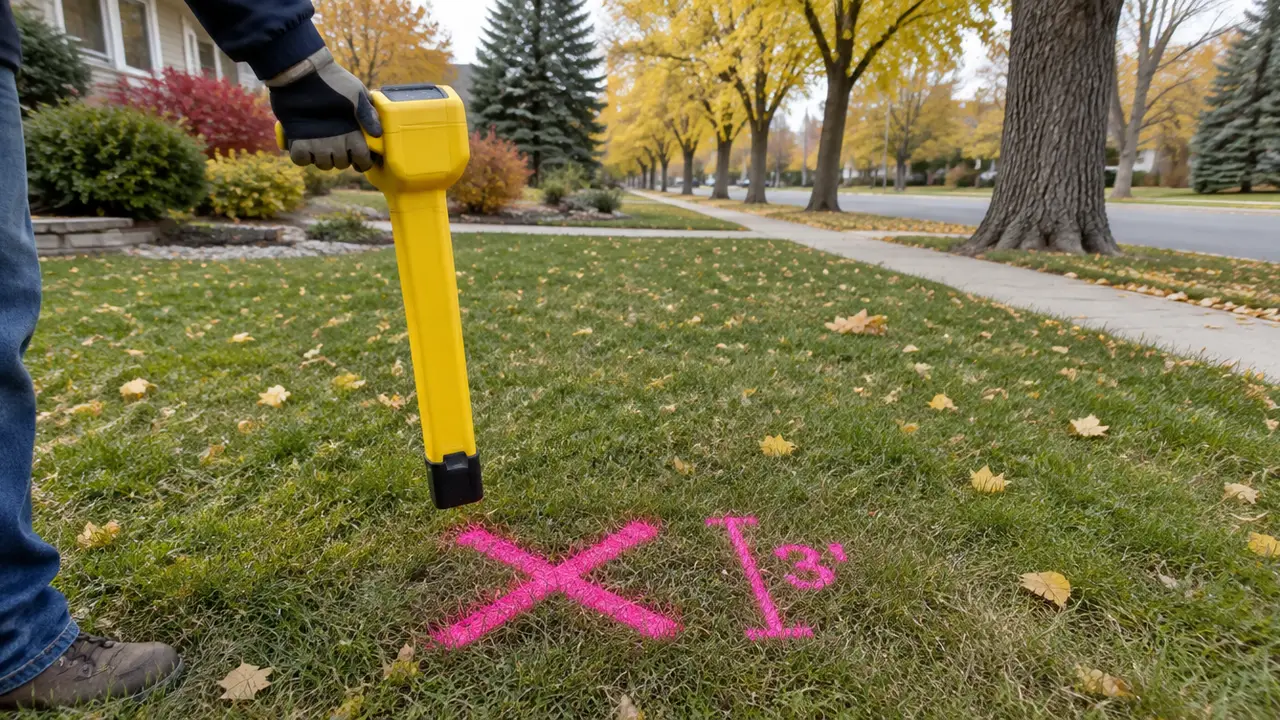
- Alberta locate requests go to Utility Safety Partners at least three full working days ahead; customer-owned sewer and water services are not registered with it.
- CCOHS guidance calls for a protective system in trenches 1.2 m or deeper; provincial rules apply to pits as well.
01 /Why do local rules matter for trenchless work?
The machines and materials are national, even international: the same ASTM practices, the same bursting heads, the same drilling rigs. What changes at the city limit is everything around them. Who owns the pipe decides who pays. Whether the city is lining its side of the connection decides whether your private side is worth doing now. Permit rules decide who applies and who inspects. Locate services decide what gets marked before a pit is dug, and what does not.
02 /Who owns the service line in different cities?
| City | Owner's side | City or utility side | Source |
|---|---|---|---|
| Edmonton | Sewer lines on the property, including a backwater valve if present | EPCOR: from the property line to the main in the street or alley | EPCOR |
| Winnipeg | The whole sewer pipe from the house to the City main, including the part under the street | The sewer main; limited financial help for the under-street part for qualifying owner-occupied homes | City of Winnipeg |
| Calgary | Confirm with the City | The City runs a pilot lining program for sanitary service pipes | City of Calgary |
| Other cities | Varies | Varies | Your municipality |
The practical point: before choosing a method, find out where your responsibility ends. A trenchless contractor can line or burst to the property line, to the main, or anywhere in between, and a clean handover at the ownership boundary saves arguments later.
03 /What is happening in Calgary and Alberta?
Calgary is an active trenchless city on both the small and large scale.
- Sanitary lateral lining pilot. The City describes a trenchless program to rehabilitate sanitary service pipes in four stages: camera assessment, cleaning, liner installation and a final assessment. Residents are notified in person shortly before work begins and asked not to run taps, flush, or use washing machines and dishwashers during installation.
- TransCanada Sanitary Trunk. A new 8.5 km wastewater pipe serving Calgary, Cochrane and nearby communities, with pipes of 1.35 m and 1.5 m diameter. The City says more than 85 percent is being built by microtunnelling to reduce surface disruption, preserving the 16 Avenue N.W. sound barrier and existing trees. Construction began in spring 2025 and is expected to finish in early 2027.
- Edmonton. EPCOR sets the ownership split at the property line, with the owner responsible for lines on the property, including any backwater valve.
Before any pit in Alberta, submit a locate request to Utility Safety Partners at least three full working days ahead. Its homeowner guidance says locate marks show approximate location, not depth; lines within one metre of the marks (five metres for high-pressure pipelines) must be exposed with hand tools; and customer-owned lines such as water and sewer service lines are not registered with it, so a private locator is needed for those. Calgary homeowners will find Calgary-specific repair guidance on TrenchlessSewerRepair.ca.
04 /What is happening in Toronto and Ontario?
- Watermain structural lining. Toronto describes structural lining as a pipe within a pipe that extends a watermain's life, best suited where open-cut costs and traffic disruption are significant. Toronto Water's TS 7.60 specification (November 2023) covers structural CIPP lining of watermains up to 400 mm, with a 50-year design life, NSF/ANSI 61 potable-water approval, temporary water services and CCTV inspection.
- Styrene guidance. Toronto Public Health explains that the odour from styrene-based relining resin can be detected far below levels linked to health effects and usually breaks down in the air within one to two days, and advises closing windows and filling drain traps with water.
- Microtunnelled local sewers. The Fairbank-Silverthorn basement-flooding project pairs a 4.5 m storm trunk tunnel with new local storm sewers built by microtunnelling on residential streets.
Ontario One Call is the province's communication link between people planning to dig and the owners of buried infrastructure, who then mark their lines. Register a request before any excavation, including the pits for a trenchless job.
05 /What about British Columbia and the rest of Canada?
In British Columbia, BC 1 Call is a free service connecting excavators with the owners of underground infrastructure; its members respond to locate requests within three business days of notification, or five for large projects. Saskatchewan, Manitoba, Quebec and the Atlantic provinces have their own one-call or utility locate arrangements; find yours through the province or your utility before any pit is dug.
Trenchless professionals are organised regionally too. The North American Society for Trenchless Technology has three chapters covering Canada: British Columbia; Northwest, for Alberta, Saskatchewan and Manitoba; and Great Lakes, St. Lawrence and Atlantic, for Ontario, Quebec and the Atlantic provinces. Their events and technical papers are a good way to find local experience with a method.
06 /What winter and ground conditions change across Canada?
- Frost. Water services must stay below frost, and the required cover is set locally. A trenchless replacement should not bring a line shallower than the old one.
- Frozen ground at the pits. Pits in winter need thawing or frost protection, which adds time and cost; the underground work itself runs below the frost.
- Cold and formed liners. The Iowa SUDAS manual reports declining use of fold-and-form and deformed-reformed liners in northern climates, where some tended to creep back toward their folded shape. Ask for cold-climate track records.
- Curing in the cold. Resin cure depends on temperature; lining crews in winter manage heat carefully, and some resins are shipped chilled to keep them from curing early.
- Ground. Glacial till with cobbles, clays, and sandy river deposits all exist across the Prairies and elsewhere; each favours different methods. See every method compared.
07 /What does trenchless cost across Canada?
Costs vary by city, but the network's 2026 planning ranges for a 15 to 25 m house lateral are a starting point: about $9,000 to $28,000 for full-length relining, $10,000 to $30,000 for bursting and $12,000 to $35,000 or more for open cut. Larger cities with deep services, heavy traffic control or road cuts at the main tend to sit higher in those ranges; work on the city side of the connection ranges from nothing, where the municipality handles it, to $15,000 or more with a road cut.
The cost guide explains each line, the Method Finder screens methods for your pipe, and municipal and commercial trenchless covers city-scale work. Wherever you are in Canada, you can send your details and the desk will reply with next steps.
FAQQuestions people ask
Who owns the sewer line under the street in Winnipeg?
The City of Winnipeg says property owners own the sewer pipe to the City main, including the part under the street. A limited assistance program applies to that under-street part for qualifying homes.
Where does homeowner responsibility end in Edmonton?
EPCOR says owners are responsible for sewer lines on their property, including any backwater valve, and EPCOR for the pipes from the property line to the main.
Does Calgary line sewer service pipes?
The City runs a pilot program that lines sanitary service pipes by trenchless methods. Ask the City whether your connection is included and which part is yours.
Will a locate service mark my private sewer lateral?
Generally not. In Alberta, Utility Safety Partners says customer-owned water and sewer service lines are not registered with it; a private locator can trace them.
How far ahead must I request locates in British Columbia?
BC 1 Call says its members respond within three business days of notification, or five for large projects, so plan at least that far ahead.