Trenchless work is governed by three layers: ASTM practices that define how each method is installed and tested, owner specifications from cities and utilities that set design life, tolerances, approvals and inspection, and training and inspection programs such as NASSCO's condition coding. A good quote names the practice it follows, the specification it meets, and how the result will be inspected.
- CIPP has three main ASTM practices: F1216 (inverted), F1743 (pulled in) and F2019 (UV-cured glass).
- Slip lining with polyethylene follows ASTM F585; close-fit liners have their own folded-PVC and deformed-PE documents.
- ASTM F1962 guides maxi-HDD of polyethylene pipe; ASTM F2831 covers non-structural epoxy coatings for metallic pressure piping.
- City specifications add what the ASTM practices leave open; Toronto's TS 7.60 for watermain lining is a good example to read.
- NASSCO's pipe, lateral and manhole assessment programs give a common language for camera reports before and after the work.
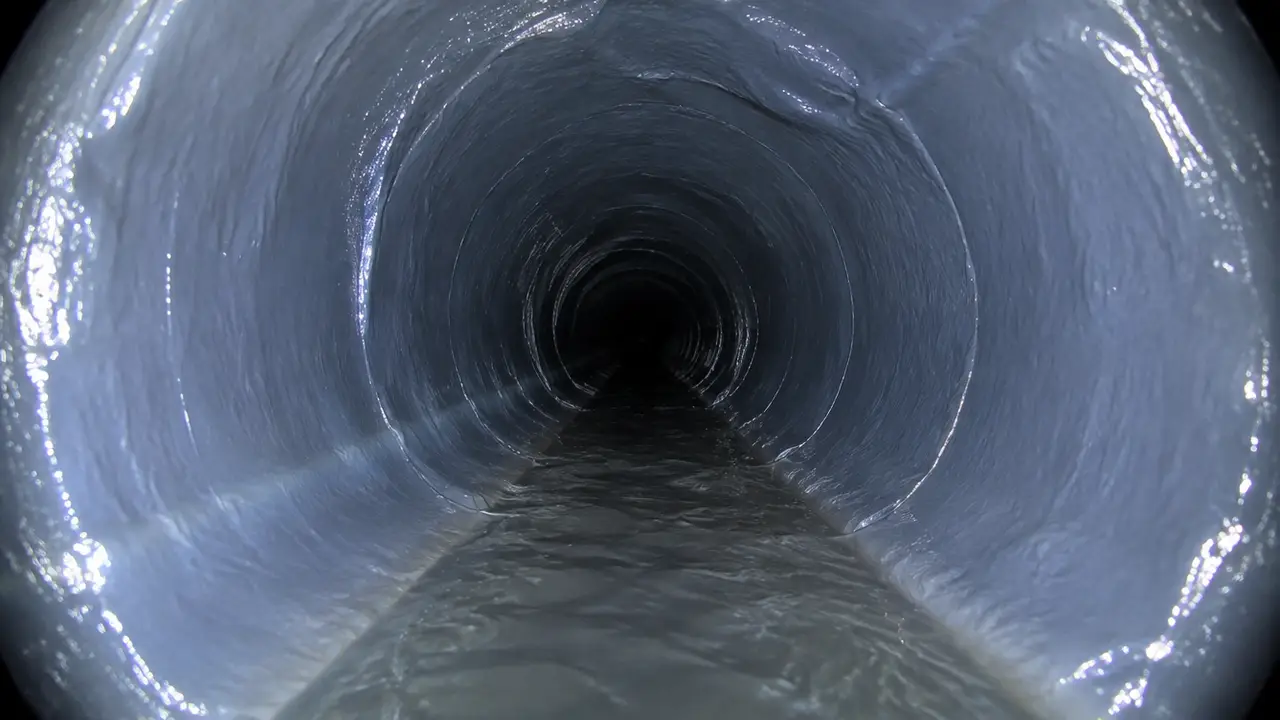
01 /Why do standards matter to an owner?
Because two quotes for "trenchless lining" can describe very different work. A standard pins down the method, the materials, the design approach and the tests, so that a price refers to something definite. When a contractor says their liner follows ASTM F1216, you can ask the follow-up questions that practice raises: which host condition was it designed for, what thickness, which resin, how was it cured, and which tests were done. Without a named standard, there is nothing to hold the work against.
Standards are not law on their own. They become binding when a building code, a municipal specification, or a contract adopts them. The national model codes published through Codes Canada are adopted, sometimes with changes, by provinces and territories, and municipalities write their own specifications for work on their pipes. For a private lateral, the contract between owner and contractor is often where a standard gets its teeth.
02 /Which ASTM practices cover each method?
| Method | Document | Scope in brief |
|---|---|---|
| CIPP, inverted | F1216 | Resin-impregnated tube inverted by water head or air pressure; cured by hot water, steam or light; 2–108 in; gravity and pressure uses including sanitary and storm sewers |
| CIPP, pulled in | F1743 | Tube pulled in and inflated by inverting a calibration hose; 2–96 in |
| CIPP, UV-cured | F2019 | Glass-reinforced tube pulled in, inflated with air, cured by ultraviolet light; 4–72 in |
| Slip lining (PE) | F585 | Insertion of solid-wall, profile-wall or corrugated polyethylene into sanitary and storm sewers along the existing line and grade |
| Close-fit, folded PVC | F1504, F1947, F1871, F1867 | Specifications and installation practices for folded and folded/formed PVC |
| Close-fit, deformed PE | F1533, F1606 | Specification and installation practice for deformed polyethylene liners |
| Directional drilling | F1962 | Maxi-HDD placement of polyethylene pipe or conduit under obstacles, including river crossings; names sewer lines among uses |
| Epoxy coatings | F2831 | Non-structural epoxy barrier coating (AWWA Class I) for metallic pressure piping, ½–36 in |
The Iowa SUDAS design manual adds a practical note on CIPP: ASTM F1216 is recognised by virtually all CIPP suppliers and contractors and covers materials, construction and design, and both F1216 and F1743 address testing. SUDAS describes liner samples being tested for short-term flexural properties and delamination, and exfiltration testing that may be required for lines of 36 inches and smaller without service laterals.
03 /What does a municipal specification add?
Owner specifications fill in what a general practice leaves open, and reading one is the fastest way to learn what a careful owner cares about. Toronto Water's TS 7.60, its specification for cured-in-place pipe lining of watermains (November 2023), is a public example.
- Scope and purpose. Structural, tight-fit CIPP lining of watermains up to and including 400 mm, intended to give a 50-year design life rehabilitation.
- Design basis. It asks the design to consider the host watermain deteriorating to the fully deteriorated condition described in ASTM F1216, unable to support external loads, as the worst case.
- Approvals. The bidder must show that the liner has current NSF/ANSI Standard 61 approval for potable water.
- Bid submissions. Independent third-party test reports and data are required to support the material properties used in the design.
- Site work. Temporary bypass lines and water services, access pits, public notification, protection of the public, and reinstatement of all services.
- Inspection and testing. CCTV at various stages, liner samples, pressure testing, disinfection and flushing.
Municipal sewer lining contracts follow the same pattern with sewer-specific items: bypass pumping, cleaning standards, reinstatement of every lateral, and a final CCTV run coded to a recognised standard. When a city lines its own main, residents typically get a notice with instructions, as the City of Calgary's lateral lining pilot and Toronto's styrene guidance show.
04 /What do NASSCO programs cover?
NASSCO, a North American association for underground infrastructure founded in 1976, runs the condition-coding programs most camera reports in the industry use. Its Pipe, Lateral and Manhole Assessment Certification Programs (PACP, LACP and MACP) give inspectors a shared code for every defect, so a report from one company can be read by another. It also runs an Infrastructure and Trenchless Certification Program (ITCP) with training on methods such as CIPP, a Building Sewer and Drain Inspection certification, and safe-practice programs for drain cleaning and grouting.
For an owner, the value is comparability. A before-and-after camera report coded to a recognised standard lets you see exactly what was found, what was renewed, and what remains, and lets a second contractor or an insurer read the same evidence.
05 /Where does engineering guidance come from?
Beyond standards, design manuals explain how to choose and specify methods. The Iowa SUDAS manual's trenchless chapter, used throughout this site, is one of the clearest public examples; it gives typical sizes, lengths, tolerances and cost advice for each method and recommends that bore tolerances be set case by case, because tighter tolerances cost more. The Plastics Pipe Institute publishes design guidance for polyethylene slip lining and HDD. The US EPA published fact sheets and a 2009 white paper on rehabilitation technologies.
In Canada, NASTT's regional chapters cover every province, from British Columbia through the Northwest chapter (Alberta, Saskatchewan and Manitoba) to the Great Lakes, St. Lawrence and Atlantic chapter, and run training and conferences. ISTT links the national societies internationally.
| Body | What it provides |
|---|---|
| ASTM International | Installation practices and material specifications |
| Municipalities and utilities | Owner specifications, approvals, inspection and permits |
| NASSCO | Condition coding (PACP, LACP, MACP) and trenchless training (ITCP) |
| NASTT and ISTT | Technical societies, training, conferences, technical papers |
| Design manuals (for example SUDAS) | Method selection, tolerances and specification advice |
| Codes Canada and provinces | Model and adopted codes for building services |
06 /How do I use standards when comparing quotes?
- Ask each contractor to name the method and the practice or specification it follows.
- For lining, ask for the design condition, thickness, resin, cure method and tests.
- For bursting and slip lining, ask for the new pipe's material, dimension ratio and joining method, and how services are reconnected.
- For drilling and boring, ask for the line and grade tolerance in writing and how it will be verified.
- For water lines, ask for the potable-water certification of every wetted material.
- Ask for coded before-and-after video and keep it.
Methods and their limits are compared in every method compared; lining detail is in CIPP in the trenchless family and on SewerRelining.ca. The Method Finder lists the reference standard for every method it screens, and the glossary defines the terms these documents use.
07 /What should a trenchless contract say about testing and warranty?
- Pre-work condition. The coded inspection the price is based on, attached to the contract.
- Method and standard. The practice followed and the product or pipe installed, with its design basis.
- Tests. For lining, liner samples and any leakage testing; for pressure pipe, pressure testing and disinfection; for bores, grade verification.
- Final inspection. A coded video of the finished work, with distances, handed to the owner.
- Warranty. What is covered, for how long, what voids it, and who stands behind it if the installer is gone.
- Unforeseen conditions. How a collapse, obstruction or unexpected utility is priced and approved before extra work starts.
Municipal specifications such as TS 7.60 cover most of these in detail; for a private job, the contract has to carry them.
FAQQuestions people ask
What is ASTM F1216?
The ASTM practice for rehabilitating pipes by inverting a resin-impregnated tube into them and curing it with hot water, steam or light. It covers 2 to 108 inch pipes and includes design and testing.
Is there a standard for slip lining?
For polyethylene in sewers, ASTM F585 guides insertion of solid-wall, profile-wall or corrugated polyethylene pipe along the existing line and grade.
What does NASSCO certification mean?
That an inspector or technician has trained in NASSCO's programs, such as PACP condition coding or ITCP trenchless training. It is about people and reporting, not a product approval.
Do Canadian cities have their own trenchless specifications?
Many do for work on their own pipes. Toronto Water's TS 7.60 for CIPP lining of watermains is one public example. Ask your municipality what applies.
Are ASTM standards mandatory?
Only when a code, specification or contract adopts them. Writing the practice into your contract is how an owner makes it binding.
NETWORKGo deeper across the HAUSE Sewer network
What a good sewer inspection report contains
What a sewer inspection report should include: full video, distances, locate and depth marks, a line map and clear limits. A checklist to judge any report.
SewerRoots.caSewer lining for tree roots: will a CIPP liner stop them for good?
Sewer lining for tree roots: how a CIPP liner seals root-damaged joints, which lines qualify, preparation, weak points at the ends, and planning costs.
SewerQuotes.comTrenchless lining vs pipe bursting: cost, fit and trade-offs
Trenchless lining vs pipe bursting cost in Canada: 2026 CIPP and bursting ranges in CAD, line items, which defects each fixes and how to choose.