Pipe coatings renew the inside of a pipe or manhole by applying a thin layer of epoxy, polyurea, polyurethane or cement mortar, blown, spun, sprayed or brushed on. Most are barrier coatings that stop corrosion and seal pinholes in pipe that is still structurally sound; they do not bridge breaks, collapses or offset joints. A few spray-applied systems are designed as structural linings, mainly for large pipes and manholes.
- ASTM F2831 covers non-structural epoxy barrier coatings for metallic pressure piping from ½ to 36 inches, applied by blowing through, spin casting or hand spraying.
- A coating is only as good as the surface preparation and the pipe underneath it.
- Coatings barely change the bore, which is their main advantage over liners on small piping.
- The US EPA lists sprayed coatings among mature rehabilitation technologies and spray-applied structural linings as still developing (2009).
- For broken, cracked-through or sagging gravity sewers, a liner or replacement is the right comparison, not a coating.
01 /What is a trenchless pipe coating?
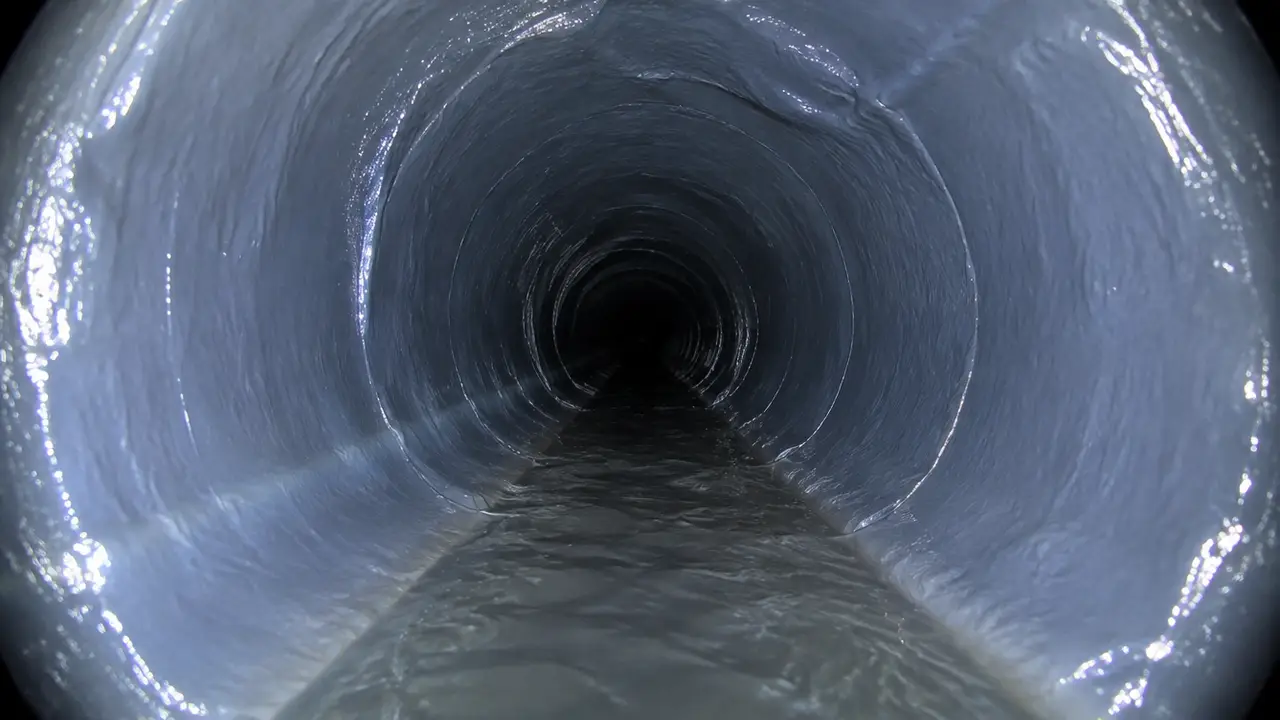
A coating is a layer of material built up on the inside surface of a pipe, a manhole or a chamber. Unlike a cured-in-place liner, which arrives as a tube, or a slip liner, which is a finished pipe, a coating arrives as a liquid and becomes a film where it lands. That makes it thin, able to follow fittings and bends, and gentle on the bore. It also means the coating depends entirely on the surface it is bonded to.
The word "epoxy pipe lining" is used for several different products, which causes confusion in quotes. It can mean a blown-in epoxy coating for small metal water piping, a brushed or sprayed epoxy on a cast iron drain, or an epoxy-resin cured-in-place liner, which is a structural tube and belongs with CIPP lining. Ask which one is proposed and what standard it follows.
02 /How does blown-in epoxy coating work on pressure piping?
ASTM F2831 is the practice for internal non-structural epoxy barrier coatings used to rehabilitate metallic pressurized piping. Its scope covers metal pipe or tube from ½ inch to 36 inches (about 13 to 914 mm), describes the coating as an AWWA Class I barrier, and allows three application methods: blowing the epoxy through the piping, spin casting, and hand spraying. It places no limit on the developed length of a system beyond what the application method and the product can achieve.
- Isolate and drain
The section of piping is shut off and drained, with temporary water arranged where needed.
- Dry
Warm air dries the inside so the coating can bond.
- Clean
An abrasive carried by air scours out corrosion, scale and old deposits to bare metal.
- Coat
Epoxy is blown, spun or sprayed on, coating pipe and fittings in one pass or several.
- Cure and test
The coating cures, the system is flushed and pressure-tested, and water quality checks follow as the owner requires.
The key word in F2831 is non-structural. The coating is a barrier between water and metal: it stops further corrosion and can seal pinholes, but it relies on the pipe for strength. If the metal is thin, split or badly pitted, the coating will not hold the pressure.
03 /Are epoxy coatings used on sewer and drain pipes?
Sometimes, mainly on building drains and cast iron under slabs, where a coating can smooth a scaled pipe and seal small leaks without breaking concrete. The logic is the same as for pressure pipe: the host has to be structurally sound, open and round, and the preparation has to reach clean, dry pipe wall. A cast iron drain with a rotted-out bottom, a cracked-through clay lateral, or a joint that has pulled apart is not a coating job.
| Camera finding | Coating | CIPP liner | Replacement |
|---|---|---|---|
| Scale and light corrosion, pipe round | Possible | Possible | Usually unnecessary |
| Pinholes, small leaks at joints | Possible | Suited | Usually unnecessary |
| Cracks through the wall, roots | Not suited | Suited | Possible |
| Missing bottom, holes, breaks | Not suited | Designed for a fully deteriorated host | Suited |
| Collapse or sag | Not suited | Not suited | Dig that section |
Coatings on drains are specialised products without the long residential track record of CIPP lining and bursting, so the questions matter: what the product is, whether it is intended for gravity drainage, what thickness is applied, how the surface is prepared, and what the final camera run must show. For drains under a basement slab, the repair decision is covered on TrenchlessSewerRepair.ca.
04 /What are spray-applied linings for manholes and large pipes?
Manholes and large sewers are where spraying makes most sense, because a crew can reach every surface. The US EPA's 2009 white paper on rehabilitation lists sprayed coating and lining systems among the mature technologies, alongside sliplining and CIPP, and describes high-build polymer coatings such as polyurea and 100 percent solids polyurethane, centrifugally cast concrete for manholes, and sprayed polymer manhole linings. It lists spray-applied structural linings as a technology still under development at the time.
The Iowa SUDAS manual describes two manhole treatments in its specifications. A brush-applied, corrosion-resistant urethane sealant is used on manhole chimneys that show infiltration or sulfuric-acid damage, after the surface is sandblasted, pressure-washed and any active leaks are plugged. Centrifugally cast mortar is used on manholes that are still structurally sound but leaking or moderately corroded: a rotating applicator lowered down the manhole throws mortar against the wall, and multiple passes build up the thickness.
05 /What makes a coating job succeed or fail?
- Preparation. Coatings fail at the bond. The surface must be clean, dry and profiled as the product requires; residual grease, scale or water ruins adhesion.
- Thickness. A film too thin leaves holidays (gaps); too thick in one pass can sag or run. Ask how thickness is measured.
- Cure conditions. Temperature and humidity inside the pipe affect cure. Cold Canadian basements and winter crawlspaces may need heating.
- The pipe underneath. A barrier coating cannot add strength. The camera run before coating should confirm the wall is sound.
- Inspection afterwards. Pressure piping should be pressure-tested; drains should be televised to show continuous coverage without runs or blockages.
06 /How does coating compare with the other renewal methods?
Put simply: coat pipe that is sound and corroding; line pipe that is cracked, leaking or weak; replace pipe that is broken, collapsed or too small. The Trenchless Method Finder applies that logic and the F2831 size range to your inputs. The broader comparison is in every method compared, and standards are mapped in trenchless standards and specifications. This site does not publish a planning range for coatings; ask for quotes with your camera footage.
07 /What should a coating quote include?
- The product and its standard, for example an epoxy barrier coating to ASTM F2831 for metal pressure piping, or the manufacturer's data for a drain coating.
- The pre-work inspection: camera video or other evidence that the pipe is sound enough for a non-structural film.
- Surface preparation: the cleaning method, the profile it leaves, and how dryness is confirmed before coating.
- Thickness: the target film thickness and how it will be checked, especially at fittings and bends.
- Isolation and temporary service: which fixtures or units lose water or drainage, and for how long.
- Testing and handover: pressure testing and flushing for water piping, a final camera run for drains, and the written warranty.
Missing items are not always a warning sign, but they are questions to ask before signing. Comparing a coating quote with a lining quote is only fair when both describe the same length of pipe, the same preparation, and the same final inspection.
FAQQuestions people ask
Is epoxy pipe lining the same as CIPP?
Not always. Some products called epoxy lining are thin coatings blown or sprayed on; others are cured-in-place liners that use epoxy resin in a structural tube. Ask which one, and what standard it follows.
How long does an epoxy pipe coating last?
It depends on the product, preparation, water chemistry and the pipe underneath. There is no single published figure; ask for the manufacturer's data and the written warranty.
Can epoxy coating fix a cracked sewer pipe?
Not a crack through the wall, a break or a collapse. A barrier coating relies on the pipe for strength. A liner or replacement is the right comparison.
Is epoxy safe for drinking water pipes?
Only products certified for potable water should be used, and your municipality or plumbing inspector can confirm what is accepted. Water is flushed and tested after application.
What is spray-applied lining used for?
Mostly manholes, chambers and large pipes, where a crew can reach every surface. Some systems are barrier coatings; a few are designed as structural linings.
NETWORKGo deeper across the HAUSE Sewer network
How to unclog a drain without a snake, and when you still need one
How to unclog a drain without a snake: plunging that actually works, pulling the trap, wet-dry vacuums, hot water, and what to do after a chemical cleaner.
SewerJetting.caWhat is hydro jetting, and how does it clean a sewer line?
What hydro jetting is: how a sewer jetter uses rear-facing jets to pull a hose up the line, scour the pipe wall and flush debris out. Plain physics.
SewerRoots.caSewer lining for tree roots: will a CIPP liner stop them for good?
Sewer lining for tree roots: how a CIPP liner seals root-damaged joints, which lines qualify, preparation, weak points at the ends, and planning costs.
SOURCESSources and further reading
- ASTM F2831 — Internal non-structural epoxy barrier coating, metallic pressurized piping
- US EPA — White Paper on Rehabilitation of Wastewater Collection and Water Distribution Systems (EPA/600/R-09/048)
- Iowa SUDAS Design Manual, Chapter 14: Trenchless Construction
- Toronto Water — TS 7.60, Cured-in-Place Pipe Lining of Watermains (Nov. 2023)