As 2026 planning estimates in CAD, a full-length CIPP liner on a 15 to 25 m house lateral typically quotes about $9,000 to $28,000, pipe bursting about $10,000 to $30,000, and open-cut replacement about $12,000 to $35,000 or more. A single sectional liner starts at about $2,500 to $6,500. Slip lining, directional drilling, coatings and microtunnelling are priced by quote or tender.
- Trenchless and open cut land in overlapping ranges; depth and surface usually decide which is cheaper on a given lot.
- Lining quotes are built from setup, a per-metre price, cleaning and each reopened connection.
- Bursting quotes are built from setup, a per-metre price and each pit, so branch connections move the price quickly.
- This network publishes residential ranges only for lining, bursting, open cut and related items; other methods are quote or tender work.
- A camera inspection with a locate, about $250 to $600, comes before any honest trenchless price.
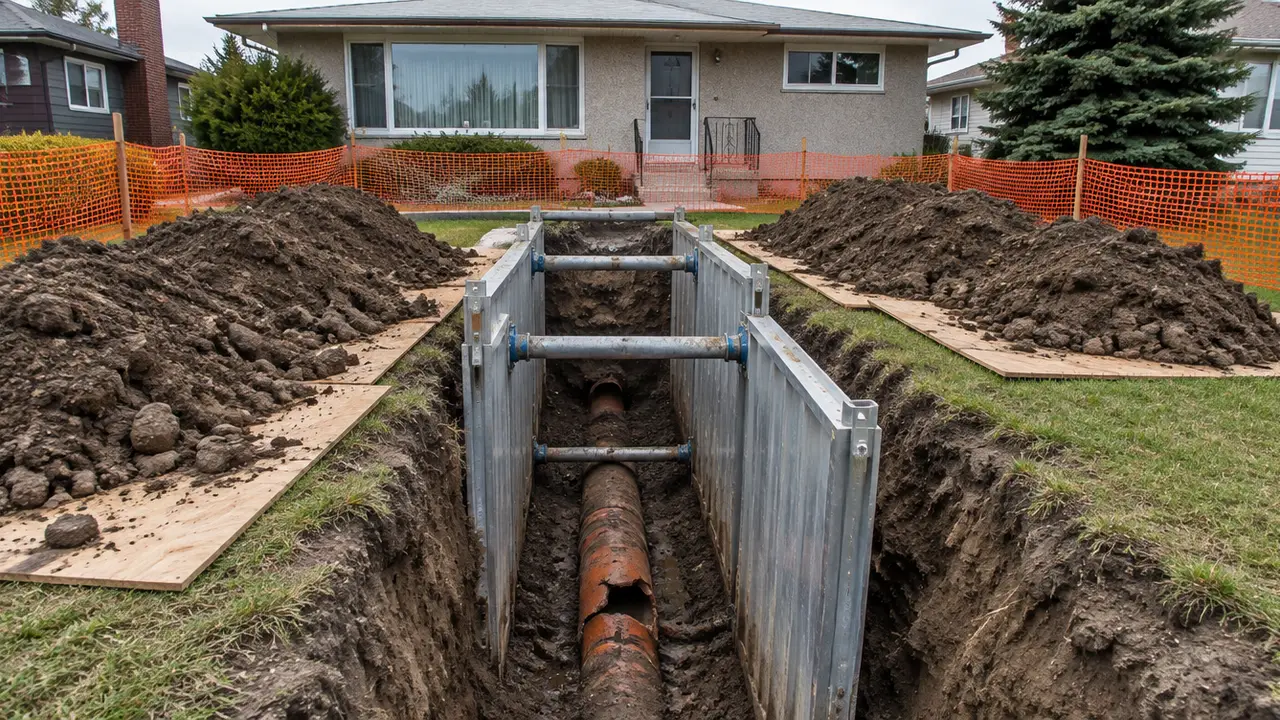
01 /What does trenchless sewer work cost in 2026?
These are the planning ranges the HAUSE Sewer network publishes across its sites for a Canadian house lateral, so the numbers on this page match our sister sites. They describe typical quotes, not a promise of what yours will be.
| Work | Typical quoted range | Per metre (per foot) |
|---|---|---|
| Camera inspection with locate | $250–$600 | — |
| Sectional (spot) liner, first section | $2,500–$6,500 | — |
| Each extra sectional liner, same visit | $1,500–$3,500 | — |
| Full-length CIPP liner, 15–25 m lateral | $9,000–$28,000 | $500–$1,200 ($150–$365) plus setup |
| Pipe bursting, 15–25 m lateral | $10,000–$30,000 | $550–$1,300 ($170–$400) plus pits |
| Open cut, 15–25 m lateral | $12,000–$35,000+ | $600–$1,000 shallow; $1,000–$2,000 deep or hard surface |
| Spot dig at a sag or collapse | $3,500–$9,000 lawn; $7,000–$16,000 deep or hard | — |
| Repair under a basement slab | $4,000–$12,000 | — |
02 /What goes into a lining quote?
| Line | Planning range | What drives it |
|---|---|---|
| Setup and mobilisation | $500–$2,000 | Access, travel, curing equipment |
| Liner per metre | $500–$1,200 per metre | Diameter, design thickness, resin, cure method |
| Cleaning and root cutting | $400–$2,500 | Roots, scale, debris |
| Each reopened connection | $300–$1,200 | Robotic reinstatement and any connection seal |
| Access pit where there is no cleanout | $1,500–$4,500 plus surface | Depth, surface, shoring |
| New cleanout | $600–$2,500 | Inside or outside, depth |
Worked through for an 18 m lateral with one branch: $500 to $2,000 setup, plus 18 m at $500 to $1,200, plus $400 to $2,500 cleaning, plus $300 to $1,200 for the connection, gives about $10,200 to $27,300 before any access work, inside the published $9,000 to $28,000 band. Adding a pit for a missing cleanout pushes it up by $1,500 to $4,500 plus surface restoration.
03 /What goes into a bursting quote?
| Line | Planning range | What drives it |
|---|---|---|
| Setup | $500–$2,000 | Equipment, head type, access |
| New pipe per metre | $550–$1,300 per metre | Diameter, pipe class, upsizing, ground |
| Each pit | $1,500–$6,000 | Depth, shoring, surface, groundwater |
| Permits | $150–$1,000+ | Municipality and scope |
| Surface restoration | $500 (seed) to $15,000+ (hard surfaces) | What the pits land in |
Pits dominate. Every branch connection on a burst line has to be dug up and disconnected before the pull, so a lateral with three branches needs five pits where a straight one needs two. The Dig vs Trenchless Disruption Calculator adds up the pits and shows the planning range for your length. Bursting in depth, including worked quotes, is on PipeBursting.ca.
04 /Why are some methods not priced here?
Slip lining, close-fit liners, coatings, directional drilling, auger boring, pipe ramming and microtunnelling are either rare on residential laterals or priced so specifically by length, diameter and ground that a range would mislead. They are quoted per job, or tendered by municipalities and commercial owners.
- Slip lining is mostly used on mains, culverts and larger pipes, where the lost bore matters less.
- Directional drilling on a house usually means a water service, priced as part of the service replacement.
- Coatings are product-specific, and the preparation is a large share of the work.
- Microtunnelling and casing bores are municipal and utility work, priced by tender.
The Iowa SUDAS manual gives some owner-side cost logic that helps here. It notes that most trenchless methods have a higher direct cost than open cut but avoid pavement, dewatering and restoration costs; that bursting gains an advantage as depth grows while shallow open cut is normally cheaper; and that lining unit costs fall sharply when large quantities are done under one mobilisation.
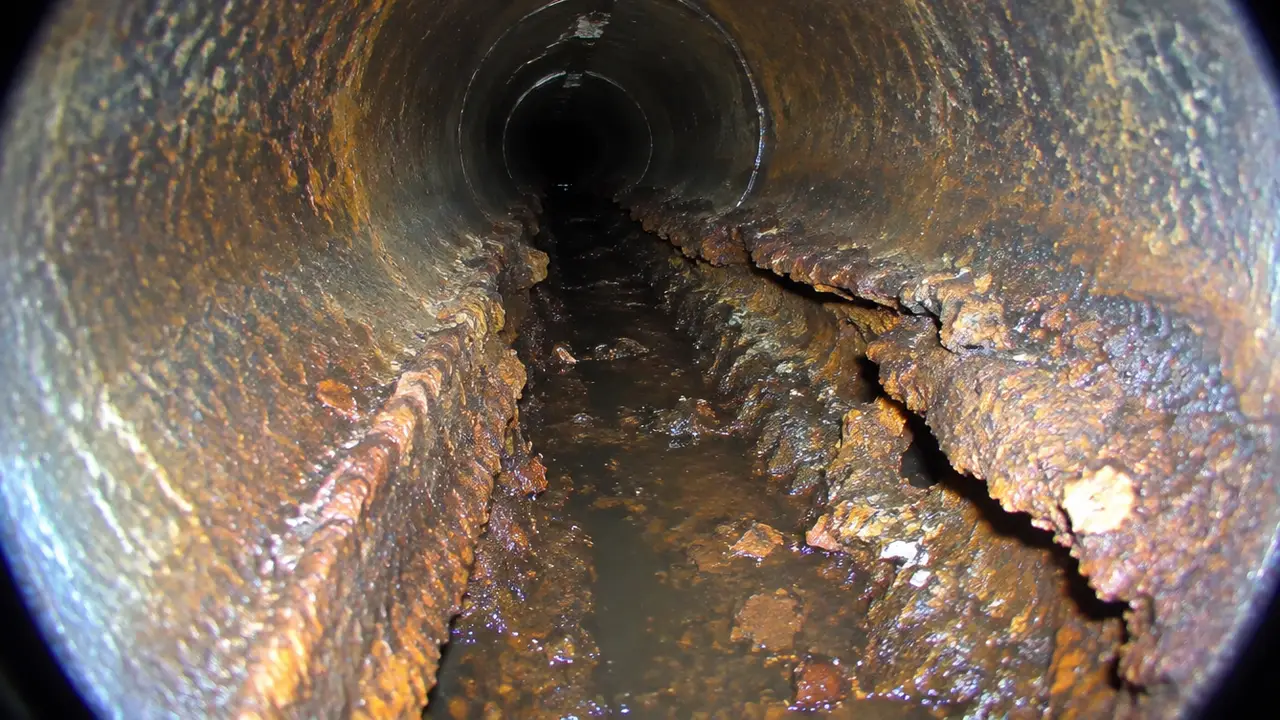
05 /Is trenchless cheaper than digging?
Sometimes. The two ranges overlap, and the lot decides. Trenchless tends to win when the pipe is deep, when a driveway, patio, mature tree or addition sits over it, or when the run is long. Open cut tends to win on a short, shallow run under lawn, or when the grade must change anyway.
Per foot, lining and bursting run about $150 to $400 before setup and pits, against $180 to $300 for shallow open cut and $300 to $600 for deep or hard-surface open cut. Per-foot numbers are useful only for comparing quotes on the same line; the fixed costs of setup, pits and restoration are what make short jobs look expensive per foot.
06 /What is usually not in a trenchless quote?
- Work at the city main. From nothing, where the municipality handles its side, to $15,000 or more with a road cut and traffic control.
- Hard-surface restoration of concrete, pavers or asphalt around pits.
- Unexpected digs at a collapse or obstruction found during the job; ask for the unit price in advance.
- Permits and inspection fees, if the quote says "by owner".
- A backwater valve or new cleanout, if one is needed.
- GST or HST, depending on your province and how the quote is written.
For comparing whole quotes line by line, our sister site SewerQuotes.com covers sewer pricing across every method.
07 /How do I get a price I can trust?
- Get the camera run
A recorded inspection with distances and a locate is the basis for every method and price.
- Screen the methods
Use the Trenchless Method Finder to see which methods your pipe can take.
- Give every contractor the same footage
Different footage means different prices for different jobs.
- Ask for itemised quotes
Setup, per metre, cleaning, connections, pits, restoration and permits as separate lines.
- Compare the method and the scope, not just the total
A liner and a burst are different products; so are two liners of different thickness.
Screen your line with the Trenchless Method Finder, read the homeowner view in residential trenchless options, and when you are ready, request comparable quotes.
FAQQuestions people ask
What is the average cost of trenchless sewer repair?
As 2026 planning estimates, a sectional liner starts around $2,500 to $6,500 and a full-length liner on a 15 to 25 m lateral about $9,000 to $28,000 CAD. Bursting runs about $10,000 to $30,000.
How much does trenchless sewer repair cost per foot?
Roughly $150 to $400 per foot for lining or bursting, before setup and pits, as 2026 planning estimates. Short jobs look expensive per foot because of fixed costs.
Is trenchless pipe lining expensive?
It overlaps with digging. On a deep line or under a driveway it is often cheaper overall; on a short, shallow lawn run it can cost more.
What does replacing a sewer lateral trenchless cost in 2026?
Pipe bursting, the usual trenchless replacement, typically plans at $10,000 to $30,000 for a 15 to 25 m lateral, with each extra pit adding $1,500 to $6,000.
Why do two trenchless quotes differ so much?
Different methods, liner thickness, pit counts, restoration and what each quote leaves out. Ask for itemised quotes based on the same camera footage.
Does insurance pay for trenchless sewer replacement?
Home policies usually treat wear and tree roots differently from sudden damage, and sewer backup coverage is often a separate endorsement. Ask your insurer or broker before the work.
NETWORKGo deeper across the HAUSE Sewer network
Sewer line replacement cost: open-cut vs trenchless, line by line
Sewer line replacement cost in Canada for 2026: open-cut, CIPP lining and pipe bursting planning ranges in CAD, per-metre math, line items and what moves price.
SewerInspector.caSewer camera inspection cost: 2026 planning ranges for Canada
Sewer inspection cost in Canada for 2026: planning ranges for a camera scope, locating, toilet access, clean-and-scope and multi-unit work, and price drivers.
SewerCleaners.caSewer cleaning cost in Canada: 2026 planning ranges
Sewer cleaning cost in Canada for 2026: typical quoted ranges for cable cleaning, hydro jetting, camera inspection, backwater valves and maintenance plans.